

A Deep Analysis of the Saffron Industry Challenges in Iran
Saffron Production Challenges have become one of the most critical issues in Iran’s agricultural sector. Despite its global potential, the industry still faces structural weaknesses, unfair pricing systems, and inconsistent governmental support. This article offers a complete analysis of the Saffron Industry Challenges, the broader Saffron Industry Challenges, and the hidden Red Gold Production Problems shaping the current state of this traditional industry.

🔶 1. Where Saffron Production Challenges Begin
Saffron Industry Challenges in Iran have deep historical roots tied to an imbalanced value chain. Farmers receive little benefit from global market growth, and many Saffron Industry Challenges emerge from the absence of unified national policies.
This has transformed Red Gold Production Problems into economic, social, and cultural issues that affect producers on every level.
🔶 2. The Price Gap: Global Profit vs. Farmer Loss
One of the most visible Saffron Industry Challenges is the massive inequality between global market prices and farmers’ actual income:
When global prices rise → farmers earn little
When global prices fall → farmers suffer immediate losses
Despite controlling nearly 90% of the world’s supply, Iranian farmers benefit the least.
This gap remains one of the most damaging Saffron Industry Challenges and illustrates how deeply rooted Red Gold Production Problems are.
🔶 3. Insufficient Investment: The Silent Obstacle to Growth
A major portion of Saffron Production Challenges comes from inadequate investment in agricultural infrastructure.
Official reports indicate that more than 1,500 billion tomans of targeted investment is needed to reach optimal production levels.
Without this investment:
Irrigation remains inefficient
Product quality varies dramatically
Red Gold Production Problems persist through planting, harvesting, and drying stages
These weaknesses highlight why Saffron Industry Challenges remain unsolved.
🔶 4. Packaging Weakness: The Most Costly Global Setback
Among all Saffron Industry Challenges, poor packaging and branding cause the biggest financial loss.
Iran is the world’s largest producer, but Spain and the UAE dominate the global retail market.
Why?
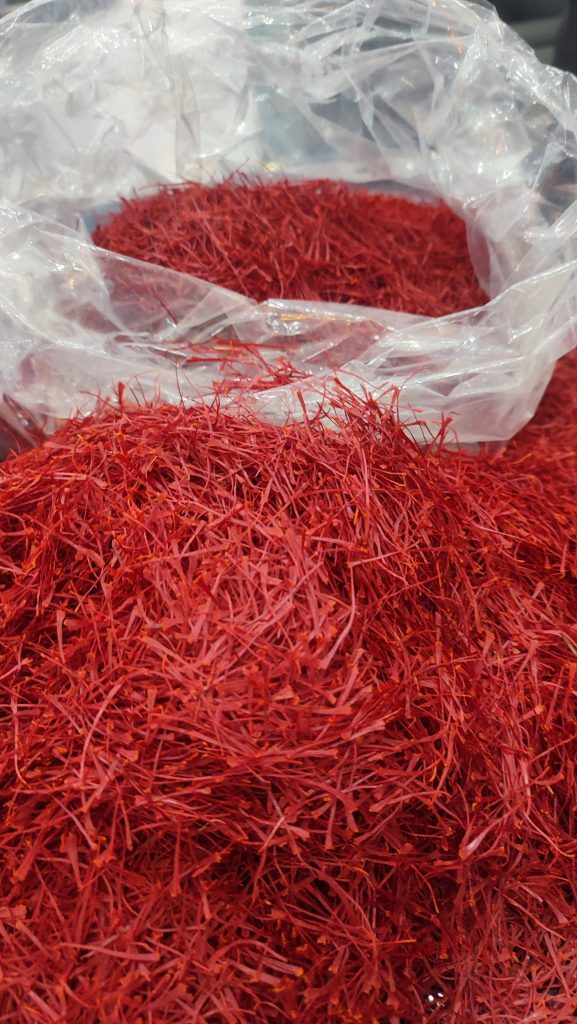
Because Iran exports saffron in bulk.
This practice represents one of the deepest Saffron Industry Challenges and consistently fuels Red Gold Production Problems for farmers and exporters.
🔶 5. Modern Technology: True Opportunity or Just a Repeated Promise?
Although officials promote innovation, most farmers still lack access to modern technology.
AI-based soil analysis, automated drying systems, and satellite-guided irrigation could dramatically increase yields, yet they remain out of reach.
This technological gap is one of the clearest Saffron Production Challenges and contributes heavily to ongoing Saffron Industry Challenges.
🔶 6. Unstable Policies: The Core of Farmers’ Concerns
Farmers need stability, but instead they face:
Rapid price fluctuations
No guaranteed purchase system
Weak insurance coverage
Unpredictable export regulations
These issues represent major Saffron Industry Challenges and intensify the structural Red Gold Production Problems harming long-term sustainability.
❓ Frequently Asked Questions About Saffron Production Challenges
❓ Why don’t farmers benefit from high global prices?
✔ Because intermediaries, export fees, and weak branding absorb most of the profit.
❓ Can the Saffron Industry Challenges be solved?
✔ Yes, through a stronger supply chain, national branding, and smarter investment.
🔶 7. The Government’s Role in Reducing Saffron Industry Challenges
To reduce Saffron Production Challenges, the government must:
Reform insurance structures
Stabilize export regulations
Offer low-interest loans
Establish real guaranteed purchase systems
Without these steps, Saffron Industry Challenges will persist and Red Gold Production Problems will deepen.
🔶 8. Responsible Brands: The Real Heroes of the Saffron Industry
Despite the difficulties, a few responsible brands have taken action.
A leading example is Azhdari Saffron, which purchases directly from farmers, ensures fair pricing, and exports high-quality products with international-standard packaging.
This model reduces Saffron Production Challenges and offers a practical solution to long-standing Red Gold Production Problems within the value chain.
🔶 9. The Road Ahead: From Farms to Global Markets
For Iran to lead not only in production but also in global value creation, the country must:
Invest in advanced technologies
Strengthen national packaging and branding
End bulk exports
Reform pricing systems
These steps are essential to overcoming Saffron Industry Challenges and ending decades of Saffron Industry Challenges.
🌸 Conclusion: Returning True Value to Red Gold
In conclusion:
Saffron is a cultural and economic treasure
Farmers are the backbone of the entire industry
Real profit must return to producers
Responsible brands like Azhdari Saffron represent the future of this sector
Solving Saffron Production Challenges requires collaboration between government, expert brands, and modern technologies.
When this path is followed, Red Gold Production Problems will finally fade, and the industry will shine again globally.