
Why It Has Become a New Global Quality Standard
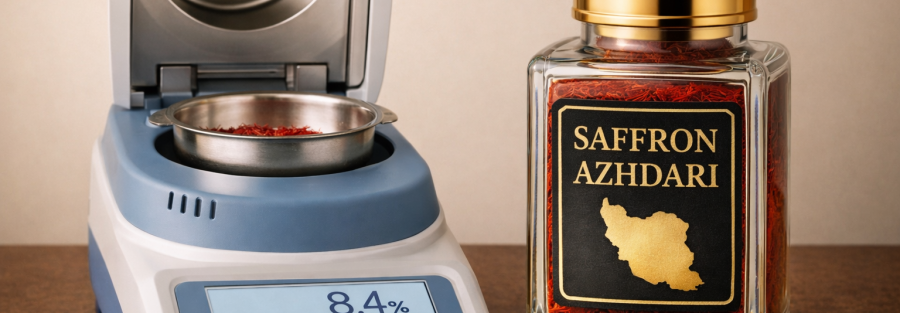
Export Saffron Moisture has become one of the most critical quality indicators in the global saffron market today. Professional buyers now understand that shelf life, weight integrity, and product stability depend directly on Moisture Content of Exported Red Gold at the moment of shipment. Unlike the past, when color and aroma were enough, real quality now begins here.
This shift has also highlighted the importance of Moisture Content of Exported Red Gold and Saffron Moisture at the Time of Export as decisive benchmarks.

Moisture Content of Exported Red Gold and Its Role in Product Shelf Life
Even a slight increase in Export Saffron Moisture can lead to aroma loss, odor changes, and reduced coloring strength during long transportation routes. For this reason, controlling Moisture Content of Exported Red Gold is no longer optional—it is a core export standard directly linked to Moisture Content of Exported Red Gold.
Moisture Content of Exported Red Gold: The Hidden but Decisive Factor
The Moisture Content of Exported Red Gold is especially critical due to saffron’s fibrous structure. Excess water creates conditions for microbial growth, a problem that usually appears at the destination rather than at origin. This is why Moisture Content of Exported Red Gold management is taken seriously by advanced markets.
Why Moisture Content of Exported Red Gold Is a Hidden Commercial Risk
High Moisture Content of Exported Red Gold may not be visible in the short term and can even make saffron appear heavier. However, over time, Moisture Content of Exported Red Gold becomes the primary reason for rejected shipments and commercial disputes, particularly when Saffron Moisture at the Time of Export was not properly controlled.
Short Q&A on Moisture Content of Exported Red Gold
❓ Is lower Moisture Content of Exported Red Gold always better?
Yes, when professional drying methods are used.
❓ Does low Saffron Moisture at the Time of Export cause brittleness?
No, proper processing preserves texture.
❓ Do international buyers test Moisture Content of Exported Red Gold?
Absolutely—Moisture Content of Exported Red Gold is a key acceptance criterion.

Commercial Saffron vs. True Export-Grade Saffron
Moisture Content of Exported Red Gold marks the clear boundary between domestic-grade saffron and true export-quality saffron. A real export product must retain quality even after months of storage, which is impossible without strict control of Saffron Moisture at the Time of Export.
Export Saffron Moisture and the Importance of Professional Drying
Managing Moisture Content of Exported Red Gold does not mean over-drying. Professional drying precisely controls temperature, airflow, and time to remove excess water without damaging active compounds. This balance protects Moisture Content of Exported Red Gold.
Storage Conditions and Moisture Content of Exported Red Gold Stability
Even perfectly dried saffron can reabsorb moisture if stored improperly. Maintaining stable Moisture Content of Exported Red Gold requires climate-controlled storage with regulated humidity and ventilation throughout the supply chain.
Packaging: The Final Barrier Against Moisture Increase
Export packaging is not only for branding. Poor packaging can increase Moisture Content of Exported Red Gold during transit, rendering earlier quality controls ineffective and affecting Saffron Moisture at the Time of Export.

Long Export Routes and Sensitivity to Export Saffron Moisture
When shipping to Europe, Australia, or East Asia, saffron passes through multiple climate zones. Products shipped with controlled Moisture Content of Exported Red Gold withstand these changes far better and arrive with minimal quality loss.
How Professional Markets View Moisture Content of Exported Red Gold
Experienced buyers understand that true value lies in dry weight, not water. That is why low Moisture Content of Exported Red Gold and verified Moisture Content of Exported Red Gold are preferred indicators of honesty and maturity in trade.
Process Transparency and Export Saffron Moisture Control
When harvesting, processing, and storage are fully controlled, Moisture Content of Exported Red Gold remains within international standards. This consistency reflects long-term thinking and professional export readiness.
A Choice That Reduces Risk
Working with suppliers who manage Saffron Moisture at the Time of
Export reduces commercial risk significantly. Azhdari Saffron follows a structured system to deliver saffron with minimal Export Saffron Moisture, ensuring both technical reliability and commercial trust.
Conclusion: Moisture Content of Exported Red Gold as the Foundation of Global Trust
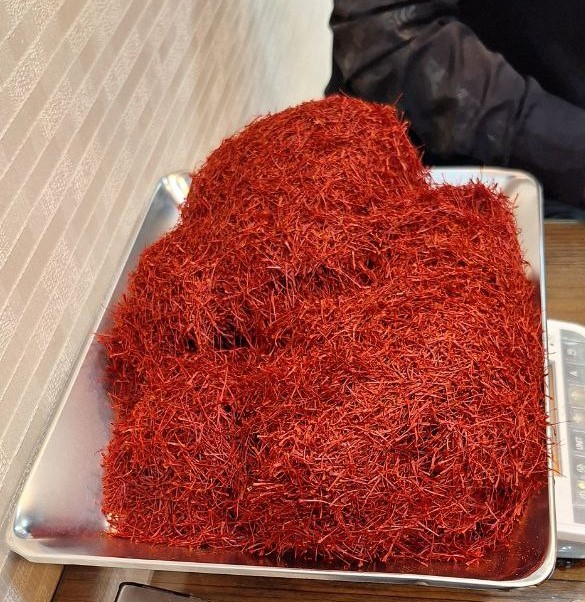
Today, Moisture Content of Exported Red Gold stands as a core indicator of global saffron quality. Products with controlled moisture last longer, remain stable, and earn buyer confidence. Choosing saffron based on Export Saffron Moisture is no longer optional—it is a strategic decision for sustainable success.