Why Now Is the Best Time to Enter
Saffron Export to China is no longer a potential opportunity; it is a structured and expanding commercial route. Today, China is not merely a consumer market but a strategic destination for Saffron Trade in China and long-term cooperation. The growing presence of Chinese traders in Iran, simplified financial pathways, and Iran’s strong capacity for Bulk Saffron Sales to China have turned this path into a calculated and low-risk decision. If you are seeking sustainable growth, this is a market to analyze strategically—not emotionally.
Saffron Export to China and Iran’s Strategic Position
Saffron Trade in China gains real meaning when Iran’s competitive advantages are understood. Iran is the world’s largest saffron producer with decades of export experience, reliable infrastructure, and diversified product grades.
In Saffron Trade in China, supply consistency and uniform quality are critical—and Iran excels precisely in these areas. The Chinese market has matured; buyers no longer look only for low prices but demand laboratory standards, professional packaging, and stable supply. This dynamic has transformed Bulk Saffron Sales to China into a long-term strategic partnership rather than a short-term transaction.
Saffron Export to China and the Role of Chinese Traders in Iran
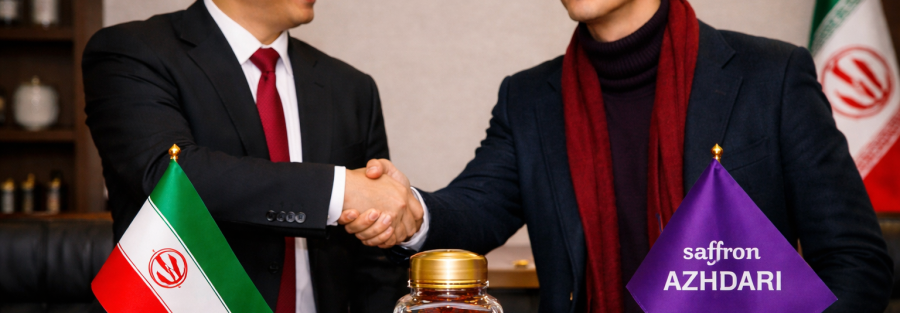
Saffron Trade in China becomes sustainable when trust is established. The physical presence of Chinese traders in Iran signals serious long-term intent. Within Saffron Trade in China, visiting production origins, verifying quality, and negotiating directly are key components of decision-making.
This direct engagement enhances pricing transparency, reduces intermediaries, and accelerates agreements. As a result, Bulk Saffron Sales to China develops based on verified sourcing rather than catalog-based transactions.
Saffron Export to China and the Advantage of Fewer Financial Barriers
Saffron Trade in China benefits from relatively smoother financial channels compared to many Western markets. Fund transfers are more straightforward, capital blockage risks are reduced, and contractual execution is more reliable.
For Bulk Saffron Sales to China, financial security is often more critical than pricing itself—especially in transactions involving tens or hundreds of kilograms. This structural advantage has positioned Bulk Saffron Sales to China as a priority route for many professional exporters.

Bulk Saffron Sales to China and High-Volume Supply Capacity
Saffron Export to China at scale requires strong production capability. Many producing countries struggle to fulfill 50–500 kg shipments in structured phases.
Iran, however, due to its extensive cultivation and export expertise, maintains a clear advantage in Bulk Saffron Sales to China. This ability to ensure continuous supply strengthens trust in Saffron Trade in China and shifts it from an occasional opportunity to a sustainable commercial corridor.
Saffron Trade in China and Quality Standardization
Saffron Export to China cannot succeed without strict quality compliance. China is a data-driven market—coloring strength, moisture control, purity analysis, and packaging standards are decisive factors.
In Saffron Trade in China, if a shipment fails laboratory evaluation, even competitive pricing becomes irrelevant. Therefore, Bulk Saffron Sales to China must always be supported by certified laboratory reports and continuous quality control systems.
Bulk Saffron Sales to China and Professional Logistics Management
Saffron Export to China depends heavily on precise logistics planning. Air freight for sensitive shipments and hybrid transport for larger orders must be coordinated with production timelines.
In Bulk Saffron Sales to China, even minor packaging flaws or shipment delays can jeopardize entire contracts. Saffron Trade in China succeeds only when cultivation, processing, packaging, and logistics operate as a unified supply chain.

Quick Questions About Saffron Export to China
Is Saffron Trade in China profitable? Yes, when supply stability and certified quality are maintained.
Is Saffron Trade in China sustainable? Yes, due to expanding industrial and consumer demand.
Are Bulk Saffron Sales to China feasible? Yes, with strong production and logistics planning.
Saffron Export to China and Selecting the Right Supplier
Saffron Trade in China depends significantly on supplier selection. A poor choice at this stage can disrupt the entire project. Successful Bulk Saffron Sales to China requires a partner who understands both Iran’s production realities and China’s import expectations.
When supplier transparency, consistent quality, and contractual clarity are ensured, Saffron Trade in China becomes a stable and scalable opportunity.
When Experience and Capacity Create Competitive Advantage
In Saffron Export to China, cooperation with an experienced exporter capable of fulfilling high-volume orders makes a decisive difference. Companies with direct sourcing, strict quality control, and deep knowledge of the Chinese market provide the framework necessary for secure and transparent Saffron Trade in China operations.
If you are aiming for long-term participation in this market, beginning with a reliable supply partner is essential.

Conclusion: Bulk Saffron Sales to China as a Strategic Decision
Saffron Export to China represents the alignment of mutual interests between Iran and China. The presence of Chinese traders in Iran, simplified financial pathways, and strong production capacity form the three pillars of this collaboration.
If you intend to enter this market professionally, act today: evaluate quality standards, choose a verified supplier, and plan strategically. Bulk Saffron Sales to China can establish the foundation for multi-year commercial growth—provided it begins with the right source.