
When Death Found Meaning Through Eternity
Saffron in Ancient Egypt was not merely a fragrant herb or a luxury spice; it represented a philosophical view of death, the body, and eternity. From a practical perspective, Red Gold in Egypt played ritualistic, protective, and functional roles that elevated it to a core element of this ancient civilization.
Saffron in Ancient Egypt and the Formation of Sacred Belief
History of Saffron in Egypt gained significance through its golden color, intense aroma, and anti-decay properties. These characteristics transformed it from a symbol into a sacred substance. The History of Saffron in Egypt shows how burial rituals became inseparable from this powerful plant.
Saffron in Ancient Egypt and Trust Built on Experience
The use of History of Saffron in Egypt was based on observation rather than blind faith. Its antibacterial nature and long-lasting fragrance earned trust in rituals linked to eternity. This is where Red Gold in Egypt evolved from a simple plant into a sacred ritual tool.
History of Saffron in Egypt and the Mummification Process
During preservation rituals, Red Gold in Egypt was combined with natural resins and oils to protect the body. The goal extended beyond appearance, focusing on decay prevention and spiritual readiness. This recurring theme appears repeatedly in the History of Saffron in Egypt.
Saffron in Ancient Egypt as a Solar Symbol
The golden hue of History of Saffron in Egypt symbolized the sun and divine power. Within funerary rites, this color recreated light within darkness, reinforcing the belief in rebirth and transforming Red Gold in Egypt into a marker of immortality.
History of Saffron in Egypt in Ritual Fragrances
Sacred perfumes often included Red Gold in Egypt as a core ingredient. Its scent was believed to purify spaces and invite divine presence, a concept deeply rooted in the History of Saffron in Egypt.
Saffron in Ancient Egypt and Belief in the Afterlife
In Egyptian belief systems, History of Saffron in Egypt supported the reunion of soul and body. Preservation of purity and dignity ensured spiritual return, elevating Red Gold in Egypt to a sacred medium rather than a mere botanical element.
Quick Questions About History of Saffron in Egypt
Was Saffron in Ancient Egypt used in mummification?
Yes, as both a protective and aromatic agent.
Why was Red Gold in Egypt preferred over other plants?
Because of its durability and anti-decay properties.
Was its use purely religious?
No, it also served medical and hygienic purposes.
Saffron in Ancient Egypt: Where Science Met Faith
The effectiveness of Red Gold in Egypt lay at the intersection of empirical knowledge and belief. Egyptians observed tangible outcomes—reduced decay, stable aroma, calming effects—long before modern science validated them.

History of Saffron in Egypt in Traditional Medicine
Medical records show Saffron in Ancient Egypt used for pain relief and mental calming. These therapeutic applications strengthened its credibility in sensitive ceremonial contexts.
Red Gold in Egypt and Social Hierarchy
Due to its value, History of Saffron in Egypt was reserved for royalty and high priests. This exclusivity confirmed that Red Gold in Egypt carried both functional importance and social prestige.
Red Gold in Egypt and the Meaning of Quality
Only pure, potent saffron qualified for eternal rituals. Red Gold in Egypt demanded authenticity—an ancient quality standard still relevant today.
Saffron in Ancient Egypt as a Living Legacy
Modern research echoes what History of Saffron in Egypt demonstrated centuries ago: antibacterial, calming, and preservative effects. This plant was always effective, never merely decorative.
Continuing an Ancient Standard Through Conscious Choice
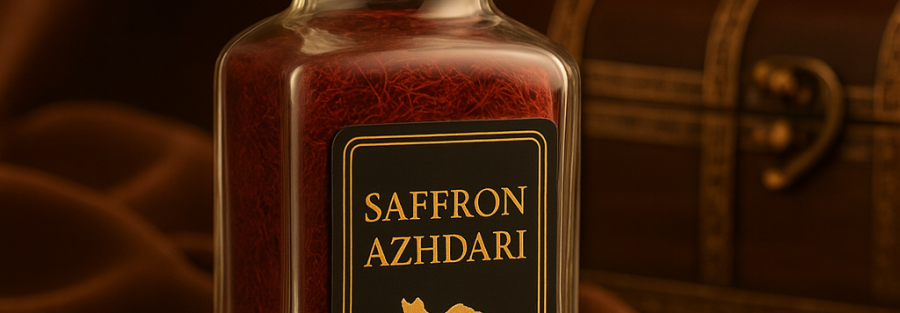
If Saffron in Ancient Egypt defined durability and purity, those principles still matter today. Azhdari Saffron honors this legacy through careful sourcing and precise processing, delivering quality rooted in experience rather than promotion.

Conclusion: Red Gold in Egypt and an Invitation to Choose Wisely
History of Saffron in Egypt proves this plant was always more than a spice—it was a bridge between history and the present. For those seeking authentic saffron with real impact and heritage, now is the moment to choose wisely and experience a tradition shaped by the world’s greatest civilizations.