Opportunities and Threats in Red Gold Trade
The Saffron Market in Iran, a reflection of the country’s agricultural strength and cultural identity, has witnessed a 10% drop in prices compared to the end of the previous year. Despite this decline, the Red Gold Trade remains balanced in terms of supply and demand, according to the Saffron Exporters Union. However, this stability might be temporary given structural vulnerabilities.

Saffron Market Fluctuations: Stability or Illusion
While the Red Gold Trade currently shows relative stability, economic experts warn it may not last. Several key factors—including exchange rates, production volumes, and export policies—need thorough analysis to understand future trajectories in the Red Gold Trade
Export Expectations and Political Uncertainty in the Red Gold Trade
In April 2025, demand in the Saffron Market dropped significantly due to uncertainty over export base prices and international negotiations. Many exporters hesitated, leading to stagnation in the Red Gold Trade and further price declines.
Drought and Reduced Cultivation: Hidden Threats to the Red Gold Trade
Beyond economics, environmental conditions also threaten the Saffron Market. Droughts and limited water resources have discouraged farmers from continuing production. If these trends persist, the market could face supply shortages and rising prices in the latter half of the year.

Currency Volatility and Its Impact on the Export Saffron Market
Exchange rate fluctuations play a critical role in the Red Gold Trade While a weaker dollar has reduced export prices, government decisions to raise the official export base rate have caused disarray. This disparity has pushed some buyers toward intermediary markets such as Afghanistan and the UAE.
Competitor Growth in Red Gold Trade: A Wake-Up Call for Iran
The increasing re-export of Iranian saffron by Afghan traders is a major concern. Purchasing Iranian saffron at low prices and rebranding it for global markets threatens Iran’s share in the Red Gold Trade and weakens its national branding efforts.
Rising Export Costs Undermine Iran’s Share in the Saffron Market
Export-related expenses—including customs and banking fees—have reduced Iran’s competitiveness in the global Red Gold Trade. With costs reaching up to $200 per kilo, many exporters are losing motivation to stay in the business.
Trusted Brands: Stabilizing Forces in the Saffron Market
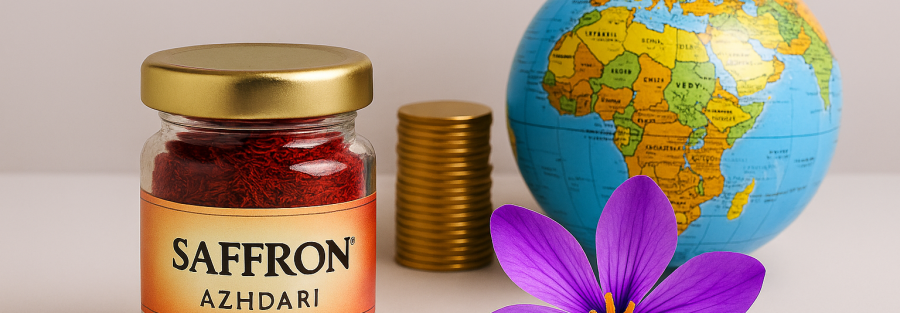
In such volatile times, reputable brands like Azhdari Saffron play a crucial role in the Red Gold Trade. With a focus on quality and fair pricing, such brands help stabilize the Saffron Market both domestically and internationally.
Azhdari Brand: A Pillar of Confidence in the Saffron Market
With top-tier Iranian farms, professional packaging, and exceptional after-sales services, Azhdari has earned a prominent place in the Red Gold Trade. Purchasing from this brand offers a unique experience in the global Red Gold Trade.
Smart Shopping Starts with Azhdari Saffron
For those seeking pure, authentic saffron, Azhdari is the ideal choice. This brand not only guarantees quality but also supports local farmers, contributing to a more sustainable Saffron Market.
Final Thoughts: A Strategic Roadmap for the Red Gold Trade
The Iranian Red Gold Trade stands at a crossroads. Price drops, rising export costs, and intensifying competition pose real risks. Yet, with policy reforms, investment in branding, and focus on quality, the path forward for the Saffron Market can still be one of success.